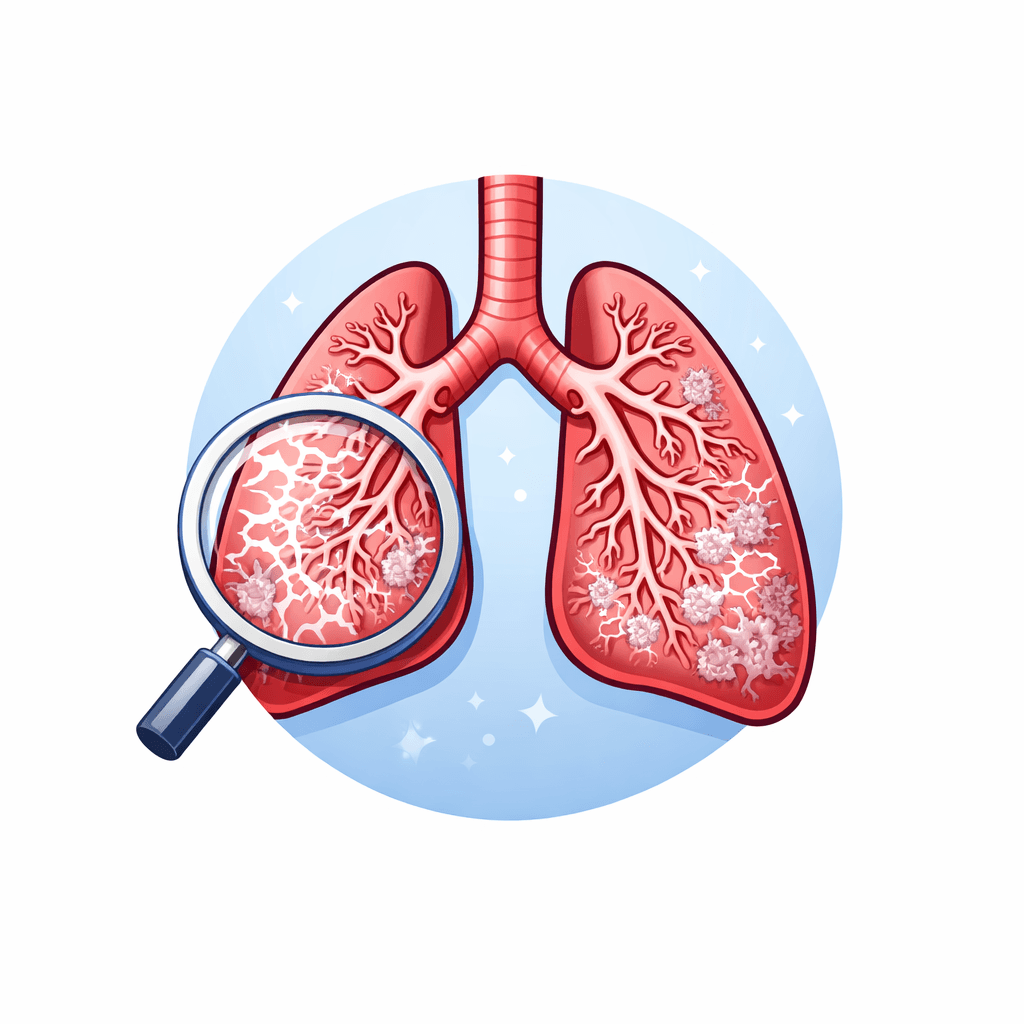
Interstitial lung diseases are a group of conditions affecting the lung's support tissue — the interstitium, which surrounds the small air sacs responsible for oxygen exchange. When this tissue becomes inflamed or scarred (fibrosis), the lungs become stiffer and less efficient at oxygenating the blood. There are many types, each with distinct causes and progression patterns.
Most common symptoms
- Progressive shortness of breath, especially with exertion
- Persistent dry cough
- Fatigue
- Reduced exercise tolerance
- Weight loss or general malaise in some cases
Symptoms develop gradually and can be confused with other conditions, which frequently delays diagnosis.
Possible causes
Autoimmune diseases — rheumatoid arthritis, systemic sclerosis, and others
Occupational or environmental exposure — dusts, mold, chemicals
- Use of certain medications
Idiopathic pulmonary fibrosis — when no cause is identified
Each type requires specific evaluation, as treatment varies depending on the disease origin.
How diagnosis is made
Investigation requires careful and often multidisciplinary evaluation.
High-resolution chest CT — the key imaging test for visualizing changes
- Spirometry and pulmonary function tests
- Blood tests to investigate autoimmune diseases
Bronchoscopy or lung biopsy in selected cases
Treatment
Treatment varies according to the type and severity of the disease.
- Anti-inflammatory or immunosuppressive medications
- Antifibrotic drugs in specific cases
- Treatment of the underlying cause when identified
- Pulmonary rehabilitation to improve functional capacity
- Oxygen therapy when necessary
Regular follow-up is essential — early diagnosis makes a significant difference in disease progression and preserving lung function.