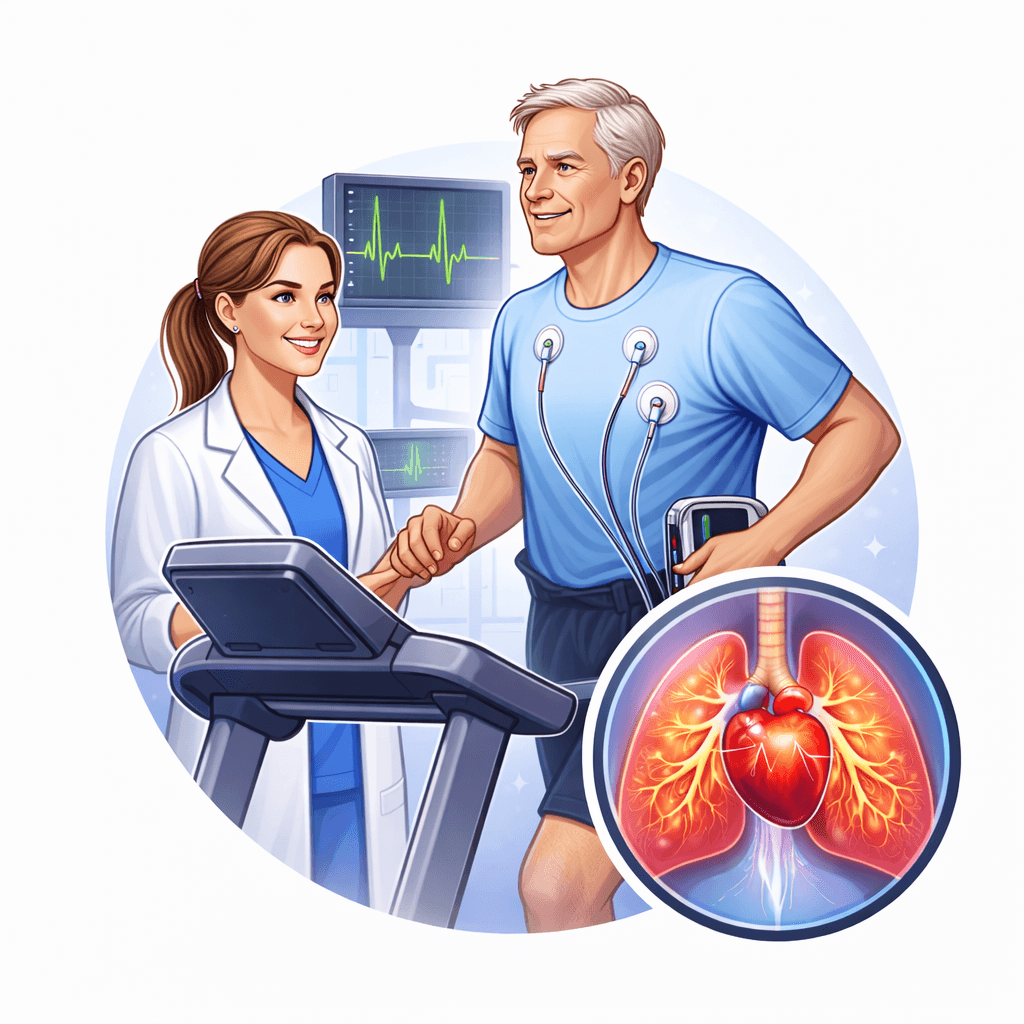
Cardiopulmonary rehabilitation is a treatment program combining supervised physical exercise, health education, and specialized monitoring for people with heart or lung diseases. Chronic respiratory diseases frequently cause breathlessness and fatigue that reduce physical activity — and the less a person moves, the more physical conditioning deteriorates. Rehabilitation breaks this cycle and restores patient autonomy.
What rehabilitation provides
- Improved capacity to perform exercise
- Reduced sensation of breathlessness
- Increased muscle strength
- Greater tolerance to exertion
- More autonomy in daily activities
- Improved quality of life and emotional well-being
Who benefits from it
- COPD (Chronic Obstructive Pulmonary Disease)
- Interstitial lung diseases and pulmonary fibrosis
- Bronchiectasis
- Pulmonary hypertension
- Recovery after hospitalizations or severe respiratory infections
- Cardiac patients with exercise limitation
- Anyone with persistent breathlessness limiting daily routine
What the program involves
The program is individualized and adapted to each patient's needs. It typically includes:
- Supervised aerobic exercise to improve endurance
- Strength training, including respiratory muscles
- Guidance on breathing techniques and breathlessness management
- Education about the disease and healthy habits
- Maintenance plan for safe physical activity in daily life
Before starting, patients undergo medical evaluation to determine appropriate exercise intensity.
Recovering movement means recovering quality of life
Even in chronic disease, improving physical conditioning brings real positive impact to daily life — allowing people to resume activities that breathlessness or fatigue had limited, with greater safety, confidence, and independence.