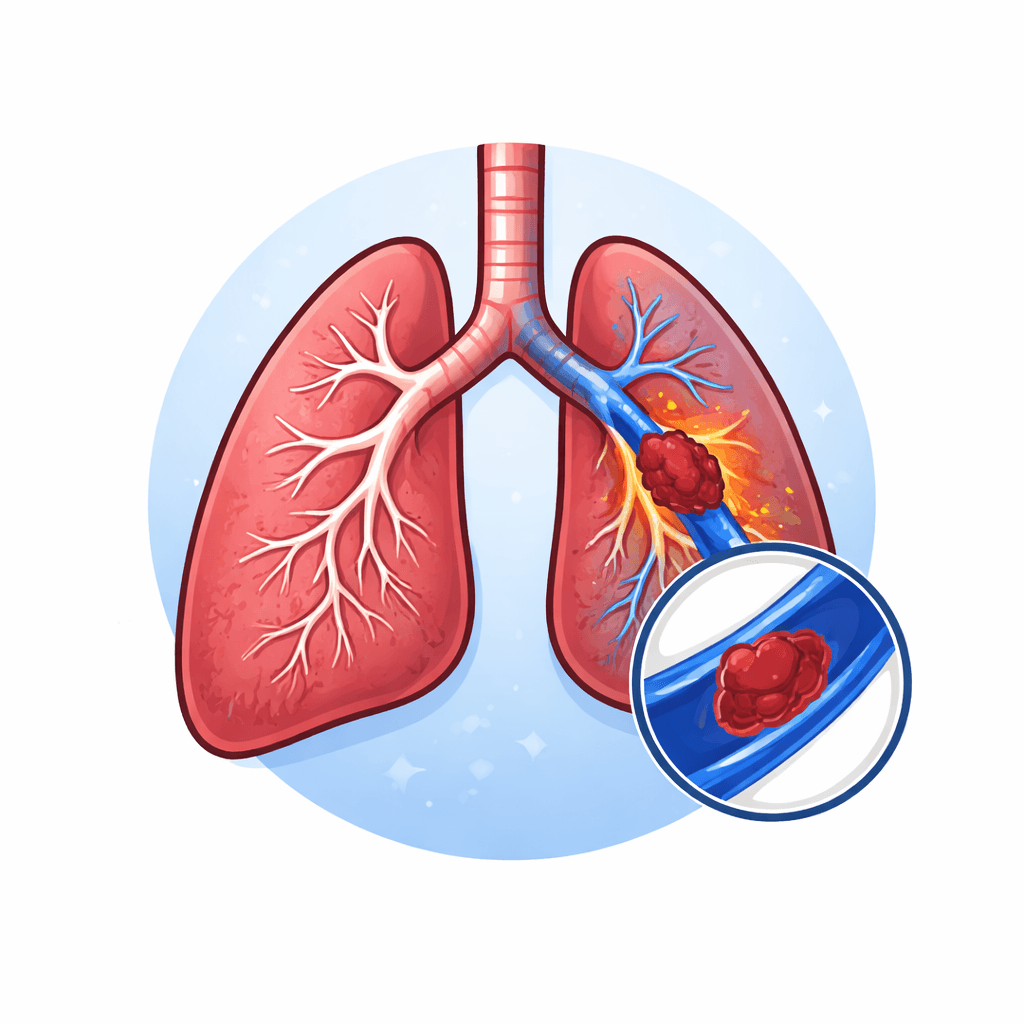
Pulmonary embolism occurs when a blood clot obstructs a pulmonary artery. In most cases, the clot forms in the leg veins — deep vein thrombosis — and travels through the bloodstream to the lungs, where it blocks blood flow and impairs oxygenation. It is a condition that requires rapid diagnosis and treatment.
Most common symptoms
- Sudden shortness of breath
- Chest pain, which may worsen with deep breathing
- Rapid breathing
- Rapid heart rate
- Cough, sometimes with blood
- Fatigue or sense of weakness
In chronic embolism cases, progressive shortness of breath with exertion may be the only sign for a long period.
Risk factors
- Prolonged immobility — long flights or bed rest
- Recent surgery, especially orthopedic
- Use of hormonal contraceptives or hormone therapy
- Pregnancy and postpartum
- Prior history of thrombosis or embolism
- Cancer
- Conditions that increase blood clotting tendency
How diagnosis is made
CT pulmonary angiography — the test of choice for visualizing clots in pulmonary vessels
Lung scintigraphy — useful when CT cannot be performed or for investigating chronic embolism
Blood tests, including D-dimer
Leg ultrasound to detect associated deep vein thrombosis
Echocardiogram to assess the heart when needed
Treatment
Treatment aims to resolve the clot, prevent new thrombi, and protect the lungs and heart.
- Anticoagulants — the basis of treatment in most cases
- Thrombolytics in more severe situations
- Surgical or percutaneous treatment in selected chronic embolism cases
- Strict follow-up to prevent recurrence
Pulmonary embolism is serious, but has effective treatment when diagnosed in time. Proper management prevents the condition from progressing to chronic forms that compromise the lungs and heart.